Three days in the Perigord Noir from Sarlat
Three days are enough to grasp the essentials of the Perigord Noir, provided you do not scatter your visits. This itinerary keeps the same base from start to finish and builds each day around a single area: the town, then the Dordogne valley, then the Vezere valley.
No timings are given on purpose: opening hours vary by season and by site. Check them on official websites when you book.
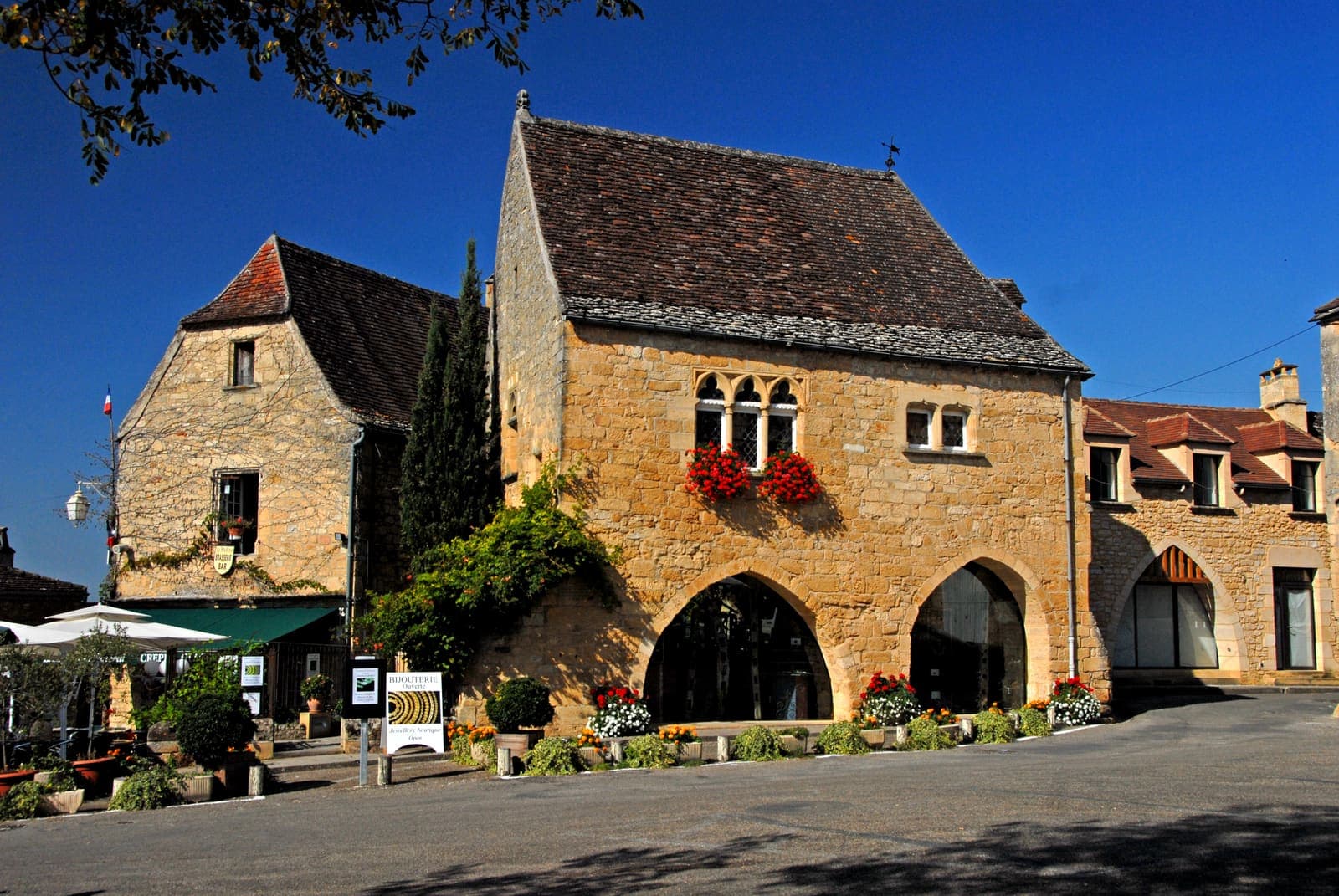
The itinerary, day by day
Day 1
Sarlat and its historic centre
Give the first day to the town, car-free. A loop of the historic centre in the morning, taking in the place de la Liberte, the cathedral and the rue des Consuls. Lunch in town, then a townhouse visit in the afternoon and a ride up the panoramic lift for the rooftop view. Finish with the evening stroll, when the lighting entirely changes the mood of the lanes. If your stay starts on a Friday, shift by a day to catch the Saturday morning market.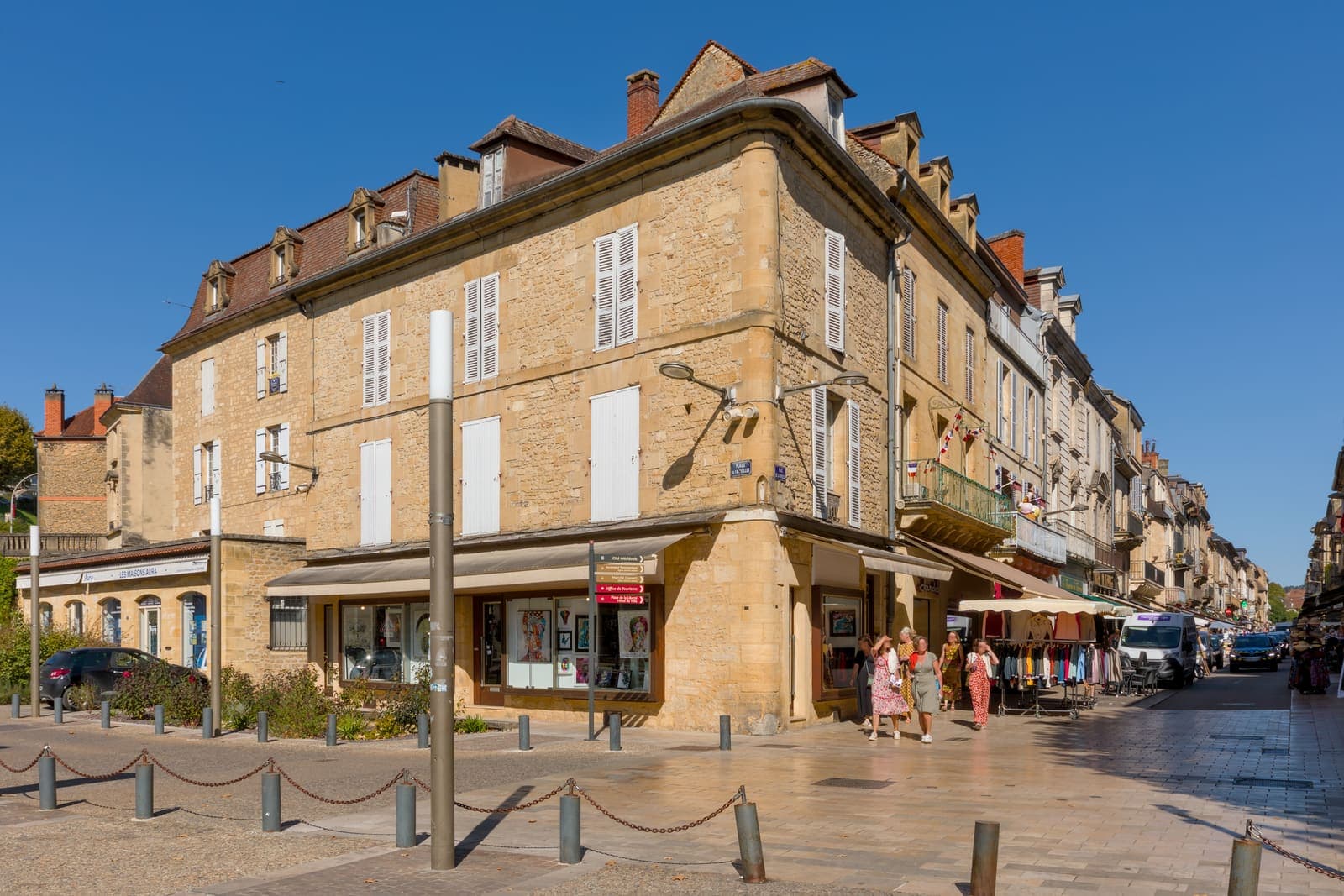 Sarlat
The old town
Cobbled lanes, honey-coloured stone façades, Renaissance mansions: the historic centre is best explored on foot, wandering through its hidden passageways.
View on Google Maps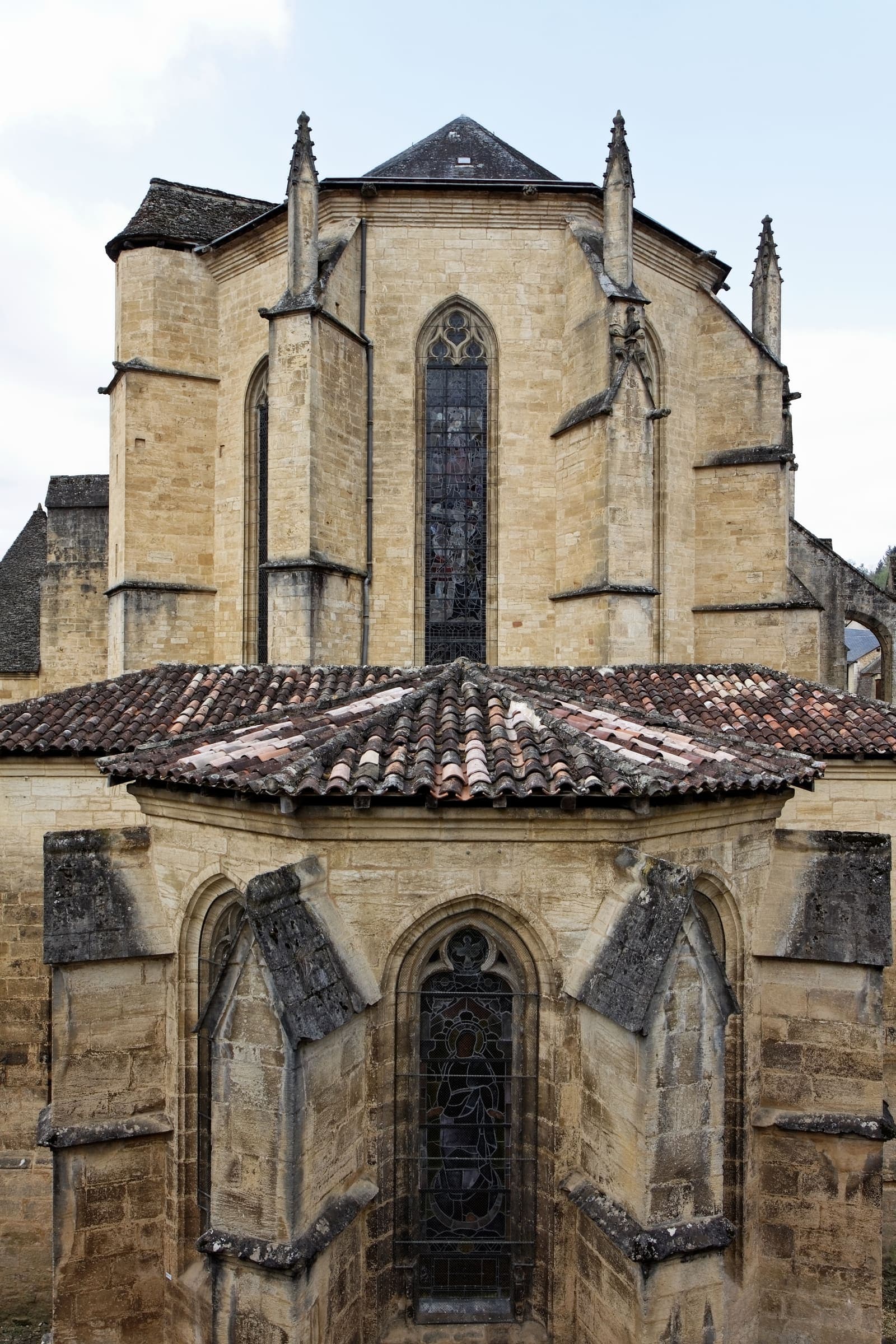 Sarlat
The Cathedral & the Lantern of the Dead
Tucked down a side street, Saint-Sacerdos Cathedral and its striking cylindrical tower tell eight centuries of history.
View on Google Maps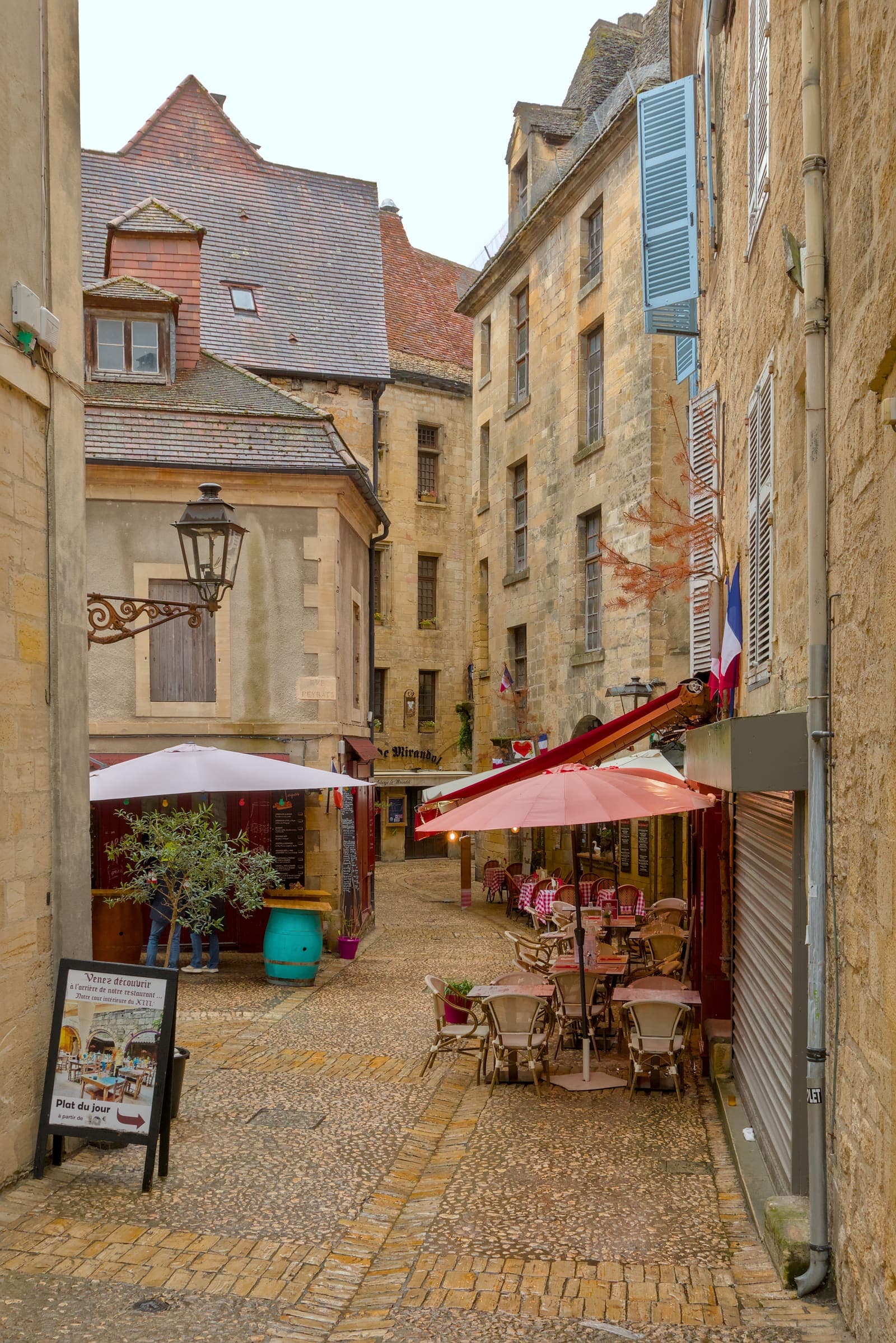 Sarlat
Rue des Consuls
Sarlat's finest street, lined with Renaissance mansions such as the Hôtel Plamon, a testament to the town's merchant wealth.
View on Google Maps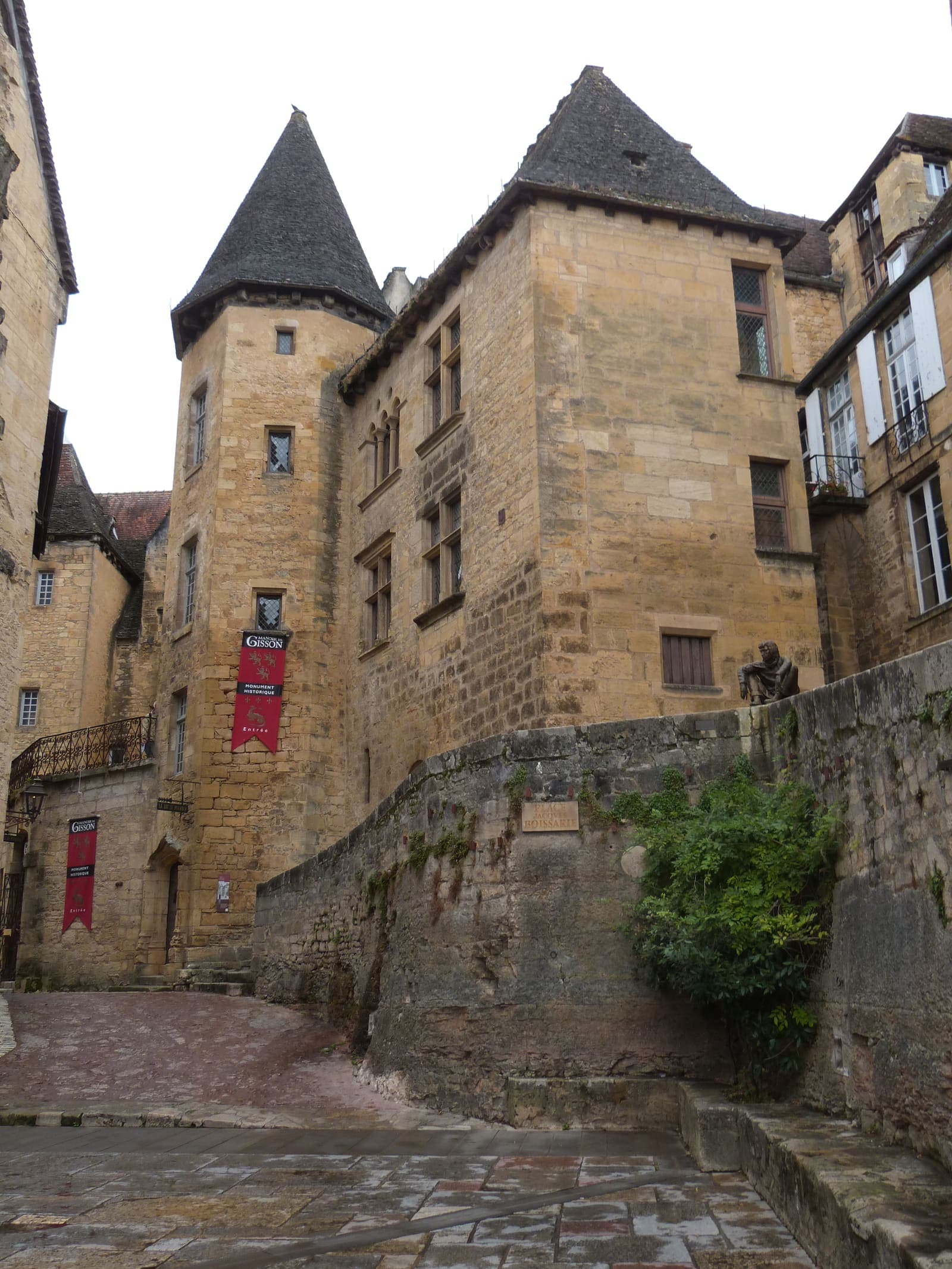 Sarlat
Manoir de Gisson
This 15th-century manor house, furnished in period style, is open to visitors and offers one of the finest views over Sarlat's rooftops from its tower.
View on Google MapsDay 2
The Dordogne valley, villages and castles
Head south. The day unfolds along the river: a perched village first thing, a castle next, lunch by the water, then a second site in the afternoon. Beynac and Castelnaud face each other and tell the same story from opposite viewpoints; Domme and La Roque-Gageac offer the widest panoramas over the valley. If it is hot, swap the second visit for a canoe descent or the shadier hanging gardens of Marqueyssac.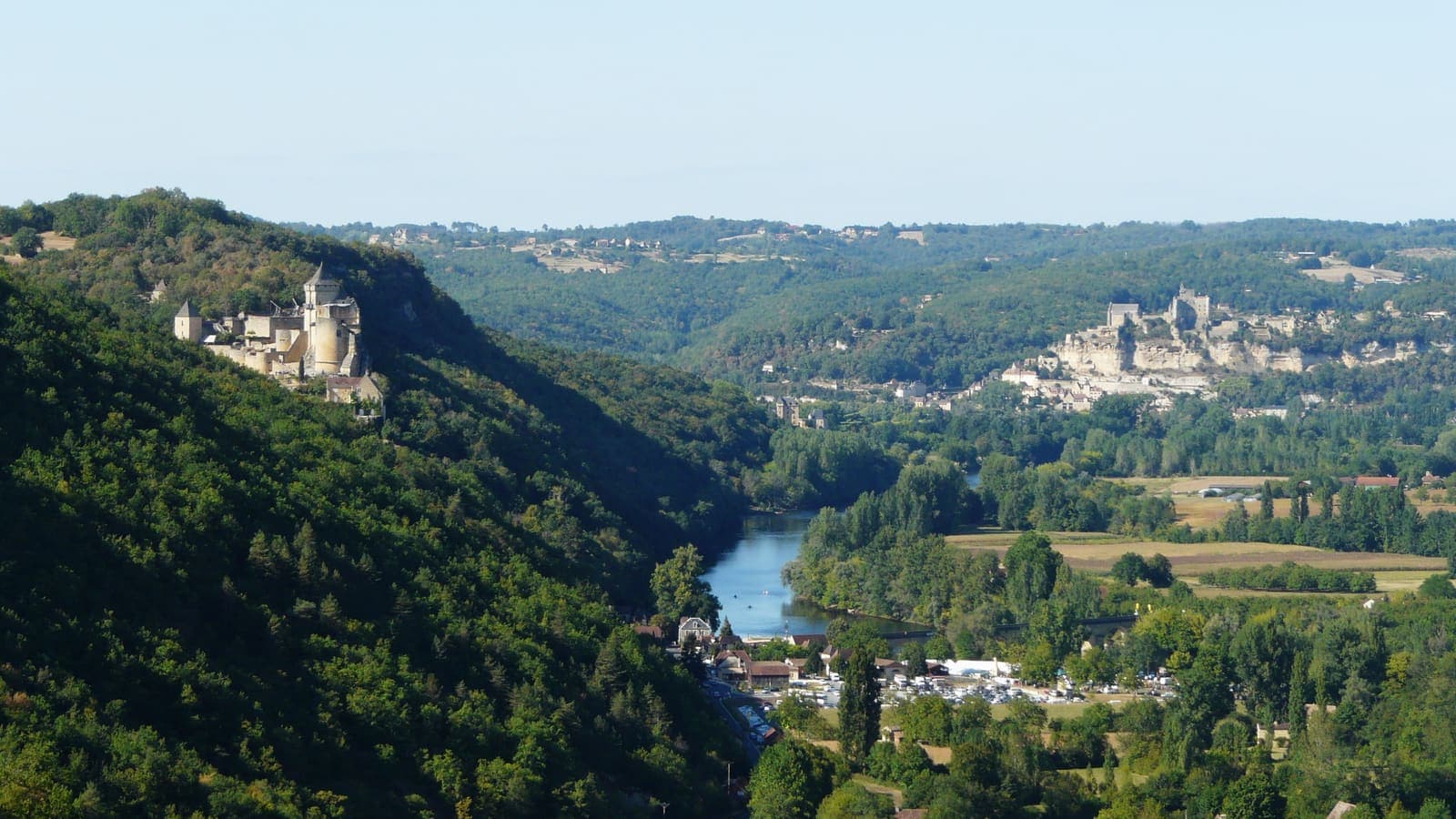 Beynac / Castelnaud
Beynac and Castelnaud castles
Medieval fortresses that once faced off against each other during the Hundred Years' War, perched high above the valley.
View on Google Maps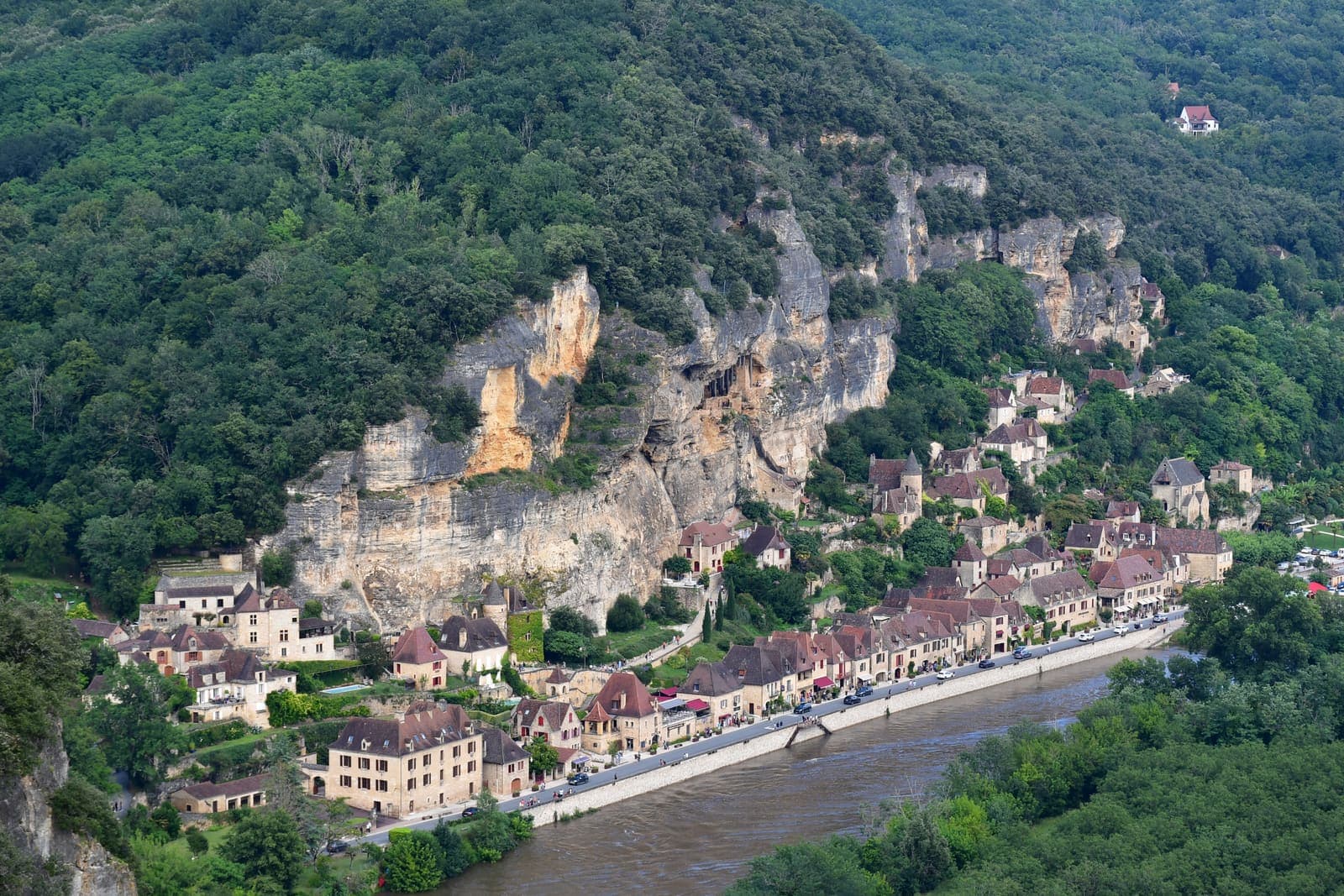 La Roque-Gageac
La Roque-Gageac
One of the most beautiful villages in France, clinging to the cliffside on the banks of the Dordogne. Explore on foot or aboard a traditional gabare boat.
View on Google MapsDommeDomme, the clifftop village
Listed among the most beautiful villages in France, Domme offers one of the finest panoramas over the valley.
View on Google Maps Vézac
VézacGardens of Marqueyssac
Century-old boxwood trimmed along the clifftop and shaded paths, with one of the finest viewpoints over the valley.
View on Google Maps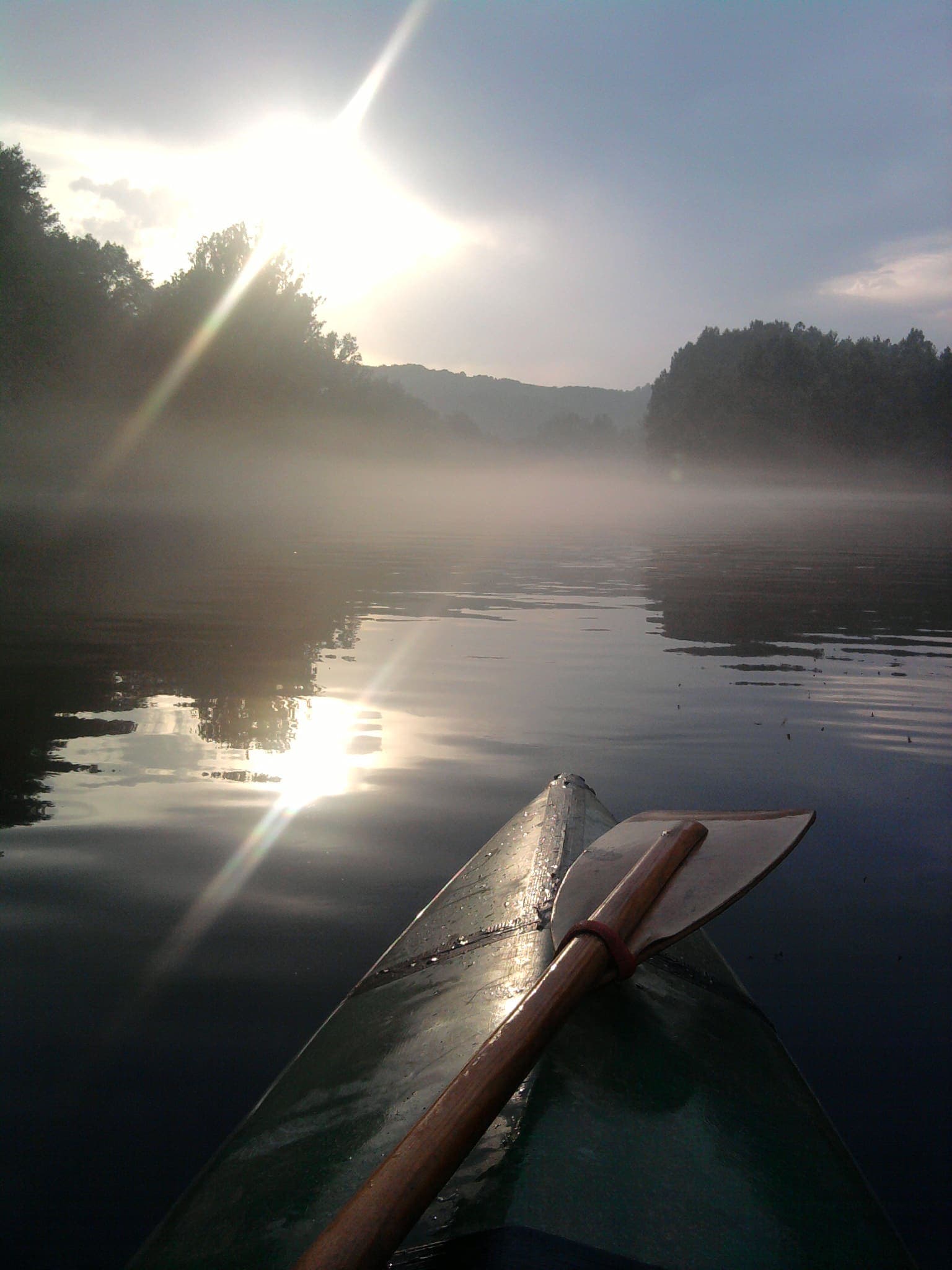 Vallée de la Dordogne
Canoeing on the Dordogne
A canoe trip between cliffs, castles and villages, one of the most beautiful ways to discover the valley.
View on Google MapsDay 3
Prehistory in the Vezere valley
Head north-west. Book the main cave visit in advance: groups are capped and slots go fast in season. Allow a full morning for the site, then round the day off with a valley village or a second cave in the afternoon. The day is busier than it looks: do not try to squeeze a castle in as well.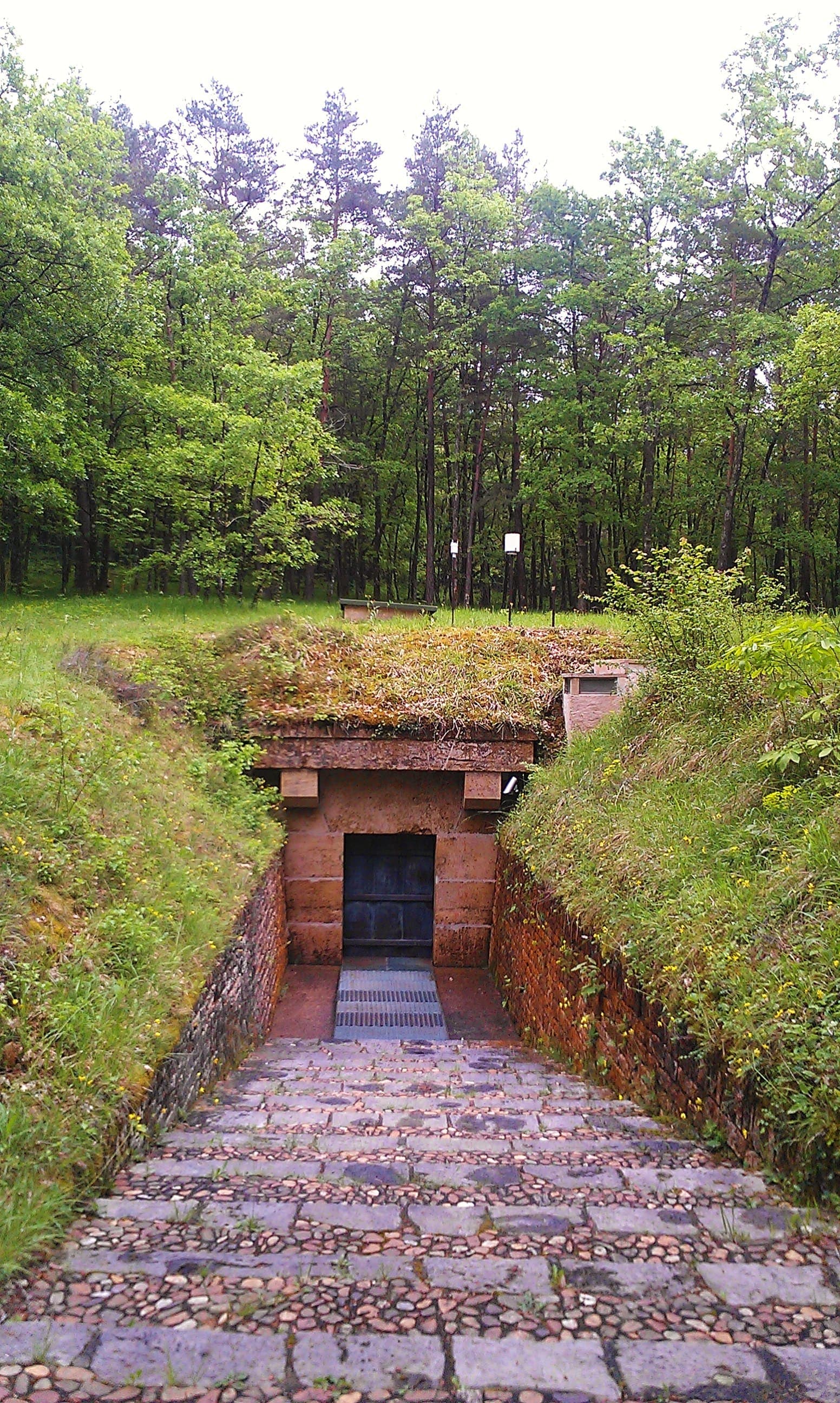 Montignac
Lascaux IV
A full-scale replica of the world's most famous prehistoric cave, with paintings 17,000 years old.
View on Google Maps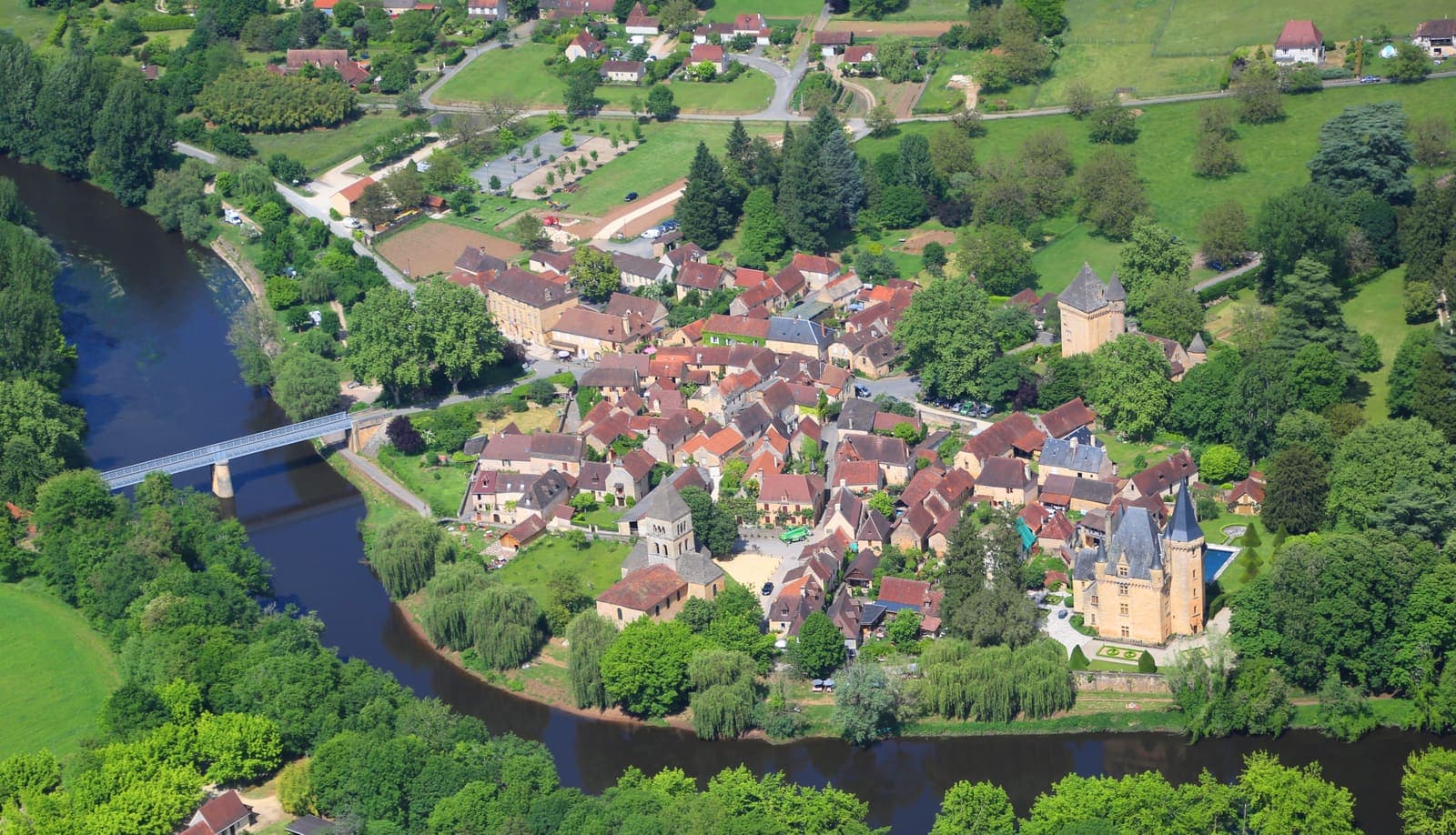 Saint-Léon-sur-Vézère
Saint-Léon-sur-Vézère
A Romanesque hamlet on the riverbank, among the most beautiful villages in France, with its 12th-century church.
View on Google Maps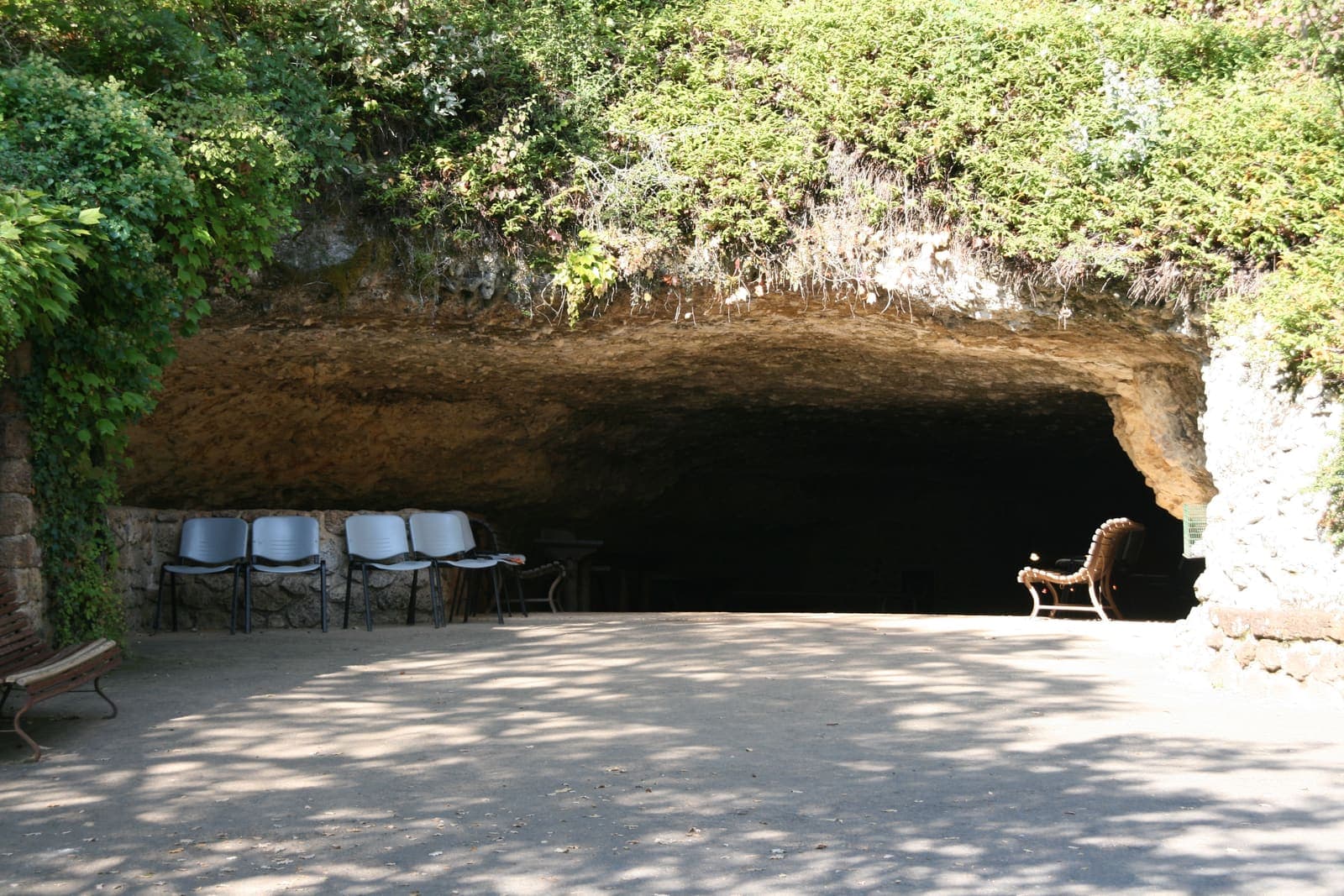 Rouffignac
Rouffignac Cave
The "cave of the hundred mammoths," explored aboard a small electric train leading to its prehistoric artwork.
View on Google Maps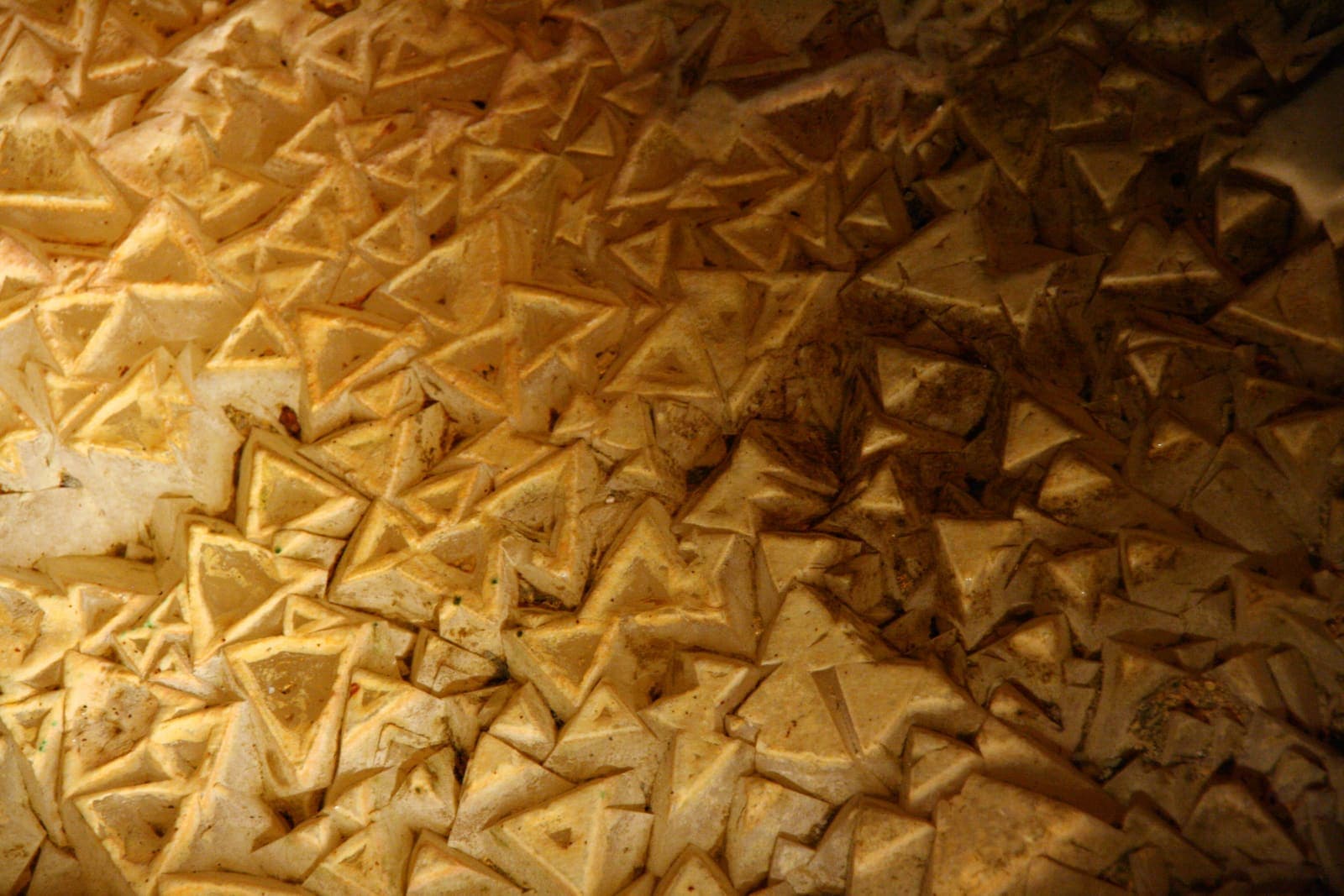 Les Eyzies
Grotte du Grand Roc
An extraordinary network of crystalline formations (eccentrics, fistulous stalactites) in the cliffs of Les Eyzies.
View on Google Maps
Adapting the itinerary
With children
Swap days 2 and 3 and bring an outdoor activity into the second day: canoeing, gardens, staged prehistoric sites. Children cope far better when monument visits are spaced out.
In winter
Several sites close or reduce their hours. Focus on Sarlat, the caves — which stay open — and the truffle season. Check each opening before travelling.
If you have an extra day
Add the quieter villages to the west, or a day with no plan at all: a village market, a footpath, a river swim depending on the season.
Frequently asked questions
Are three days enough for the Perigord Noir?
Yes for the essentials: Sarlat, the Dordogne valley and one major prehistoric site. Five days let you add the western villages and slow the pace.
Should you change accommodation during the three days?
No. The region is compact enough to stay in one place, and Sarlat is the most central point between the two valleys. Moving would cost more time than it saves.
Read next
- Five days in the Perigord NoirA five-day Perigord Noir itinerary from Sarlat: the town, Dordogne castles, Vezere prehistory, listed villages and gardens, without changing accommodation.
- Where to stay to visit the Perigord NoirChoosing where to stay to explore the Perigord Noir: why Sarlat is the most central base, and our two town-centre studios with free parking.
- What to do around SarlatDordogne castles, perched villages, gardens, prehistoric caves and canoeing: everything to do around Sarlat, all within an hour's drive.
- Two days in SarlatA two-day plan for Sarlat: historic centre, market, monuments and half a day in the Dordogne valley. Ideal for a weekend in the Perigord Noir.
Content updated on