Visiting Sarlat, in the heart of the Perigord Noir
Sarlat-la-Caneda is a town you explore on foot. The historic centre is compact: a handful of cobbled streets, two main squares and a maze of lanes where golden stone facades echo one another across the centuries. Half a day is enough for a first loop; two days and you start to understand it.
This page gathers the essentials, how to find your way around the old town, and when to come to avoid the busiest hours.
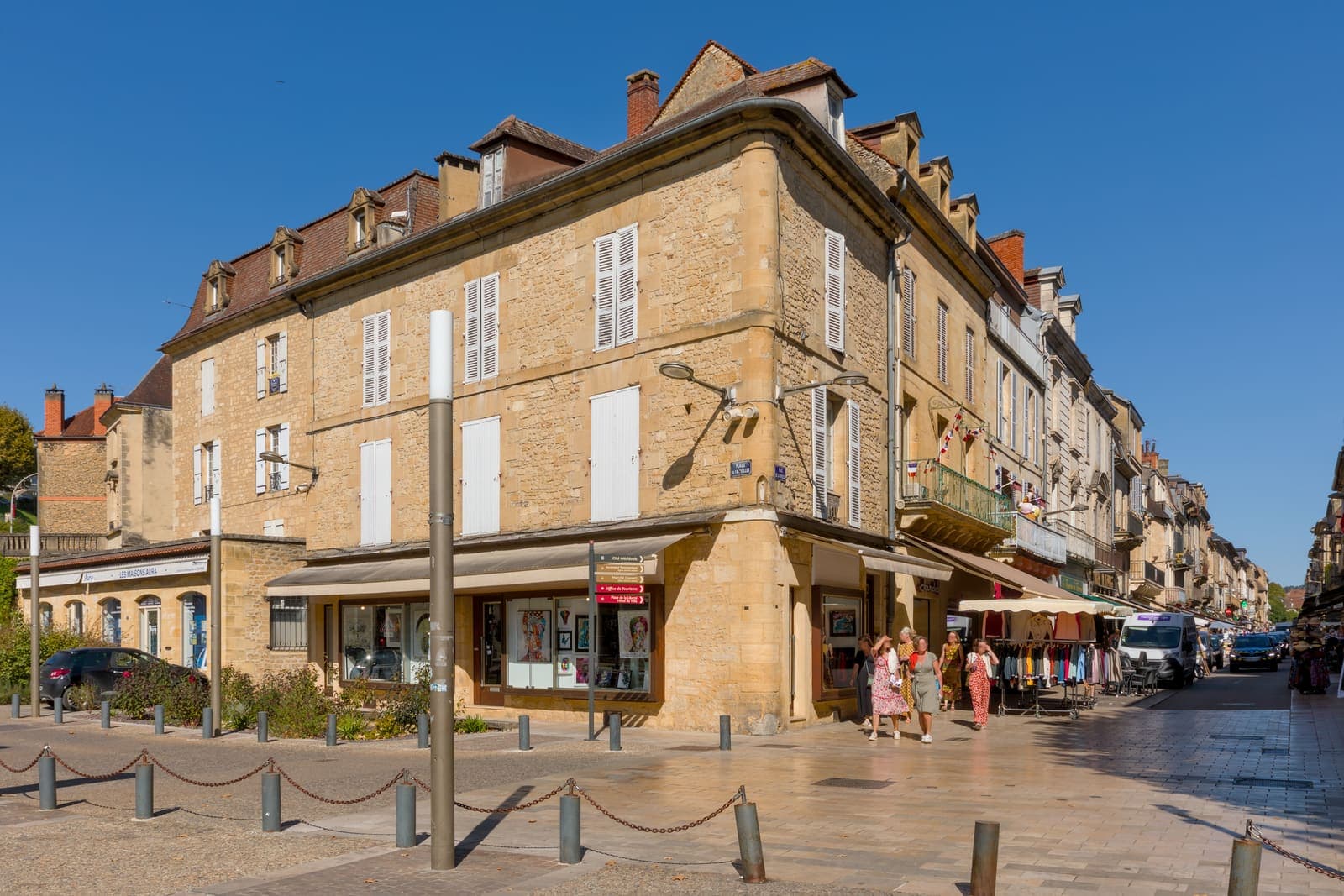
Why Sarlat is so striking
The town owes its remarkable state of preservation to a quirk of history: long bypassed by major routes and industry, it went through the 19th and early 20th centuries largely untouched. In the 1960s, the French Malraux act on protected historic districts made it one of its very first projects, and the restoration of the centre went on to serve as a model for other French towns.
The result is a medieval and Renaissance centre of rare density, where a 15th-century townhouse, an inner courtyard and a vaulted passageway can all sit within a few steps of each other. The pale local limestone turns golden as the sun drops — that is when Sarlat is at its most photogenic.
The essentials of the old town
All of these sit within the historic centre and link up easily on foot, with no need to move the car.
The old town
Cobbled lanes, honey-coloured stone façades, Renaissance mansions: the historic centre is best explored on foot, wandering through its hidden passageways.
View on Google Maps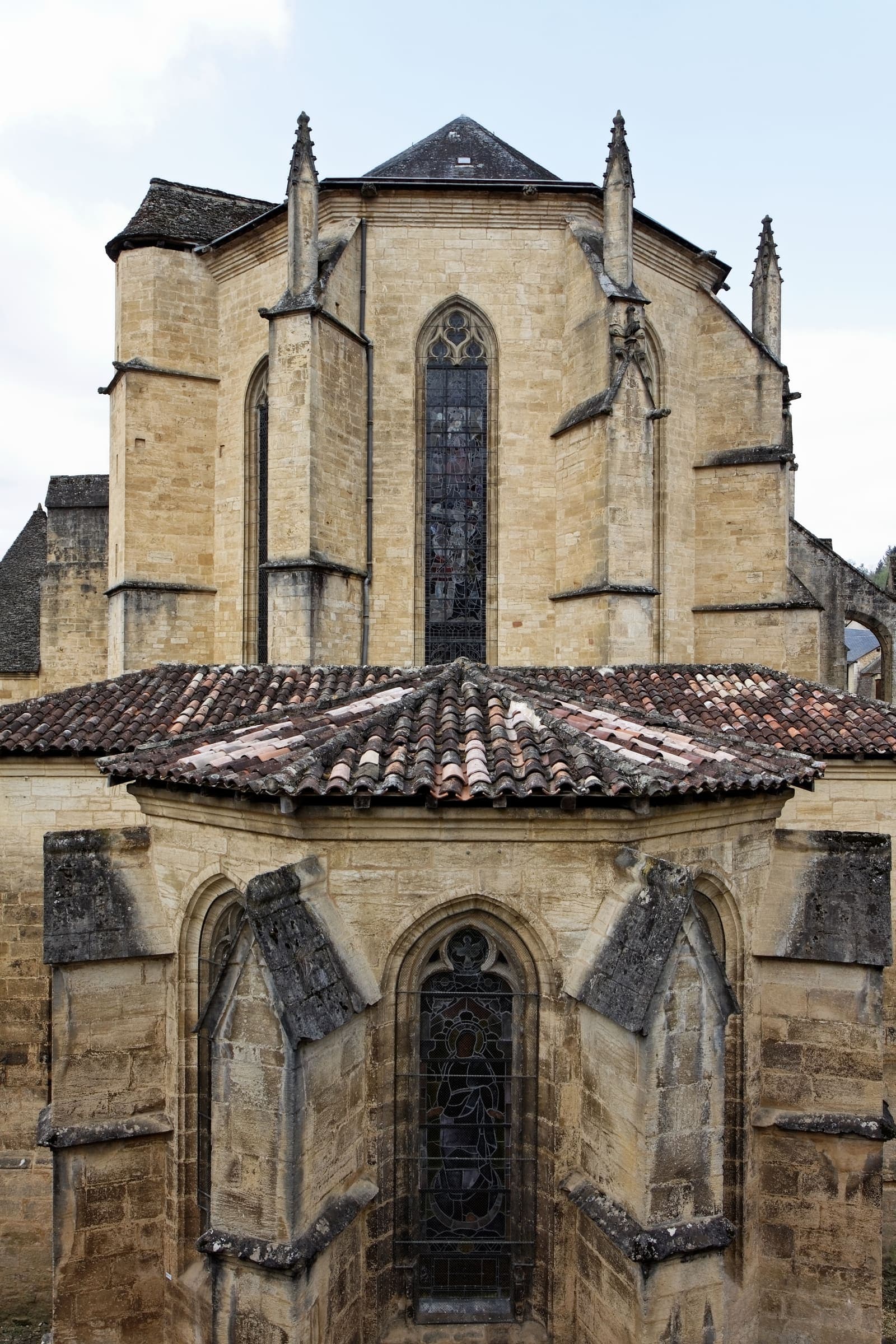
The Cathedral & the Lantern of the Dead
Tucked down a side street, Saint-Sacerdos Cathedral and its striking cylindrical tower tell eight centuries of history.
View on Google Maps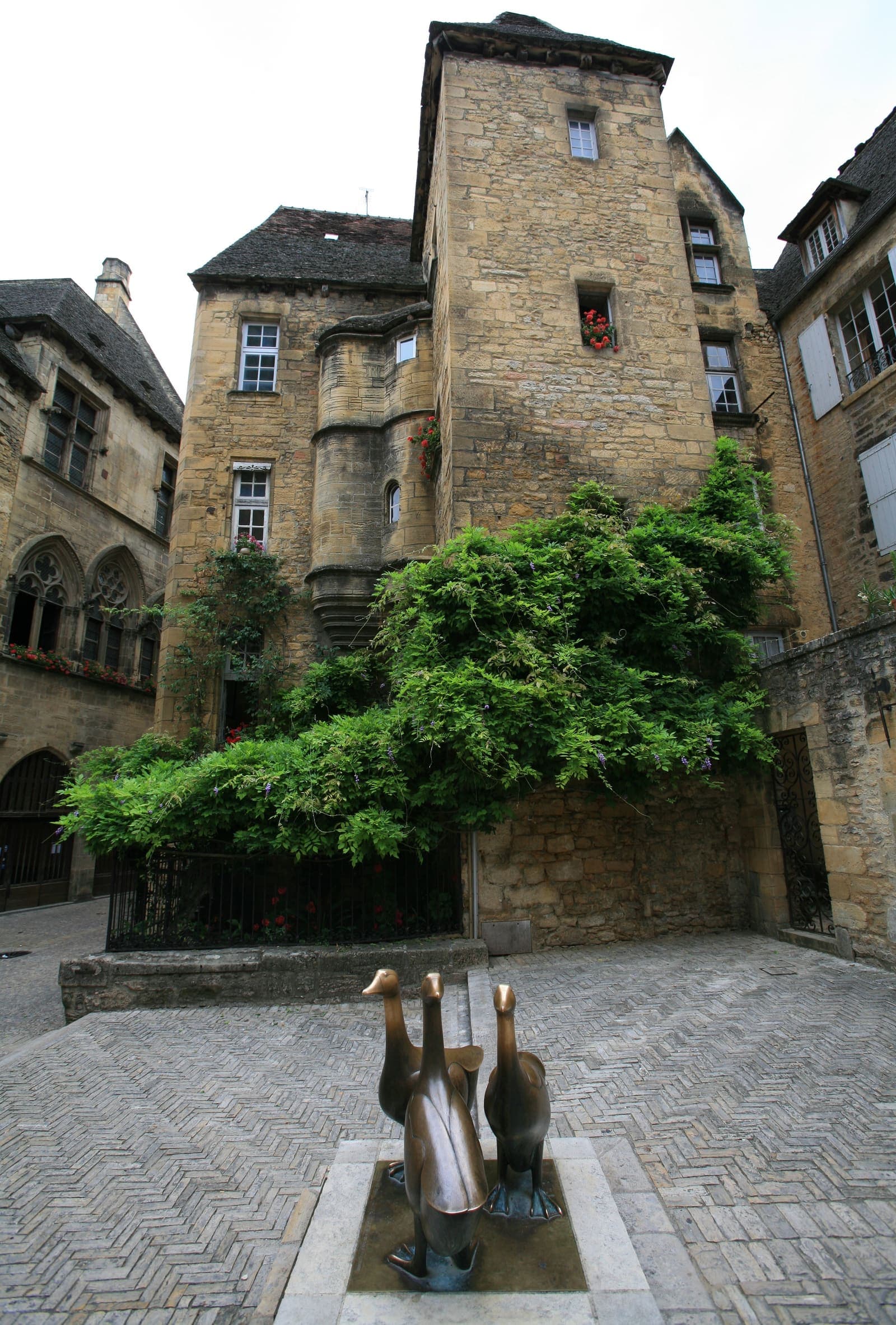
Place des Oies (Goose Square)
A charming cobbled square marked by a statue of geese, a nod to the region's foie gras tradition and the setting for the Saturday farmers' market.
View on Google Maps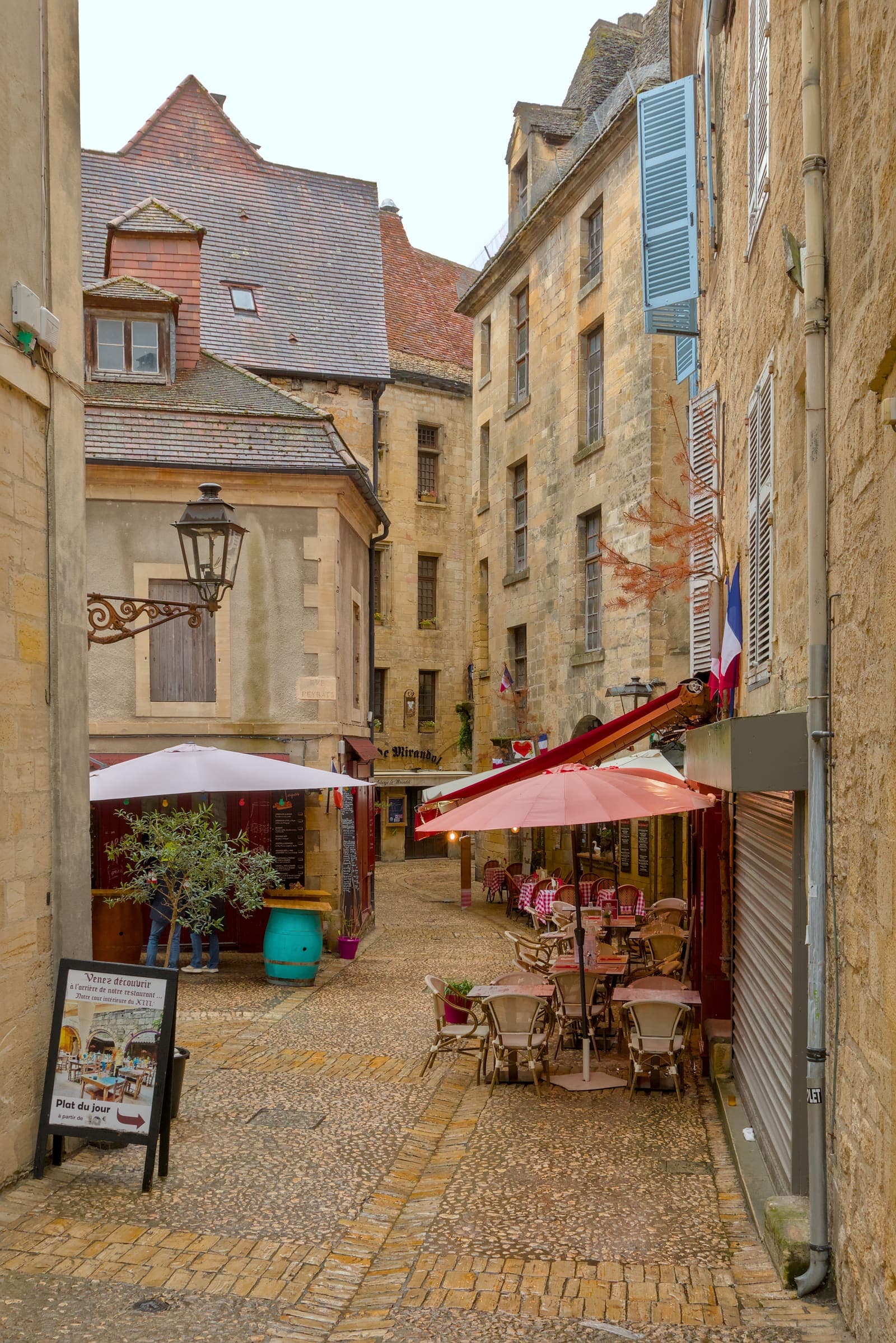
Rue des Consuls
Sarlat's finest street, lined with Renaissance mansions such as the Hôtel Plamon, a testament to the town's merchant wealth.
View on Google Maps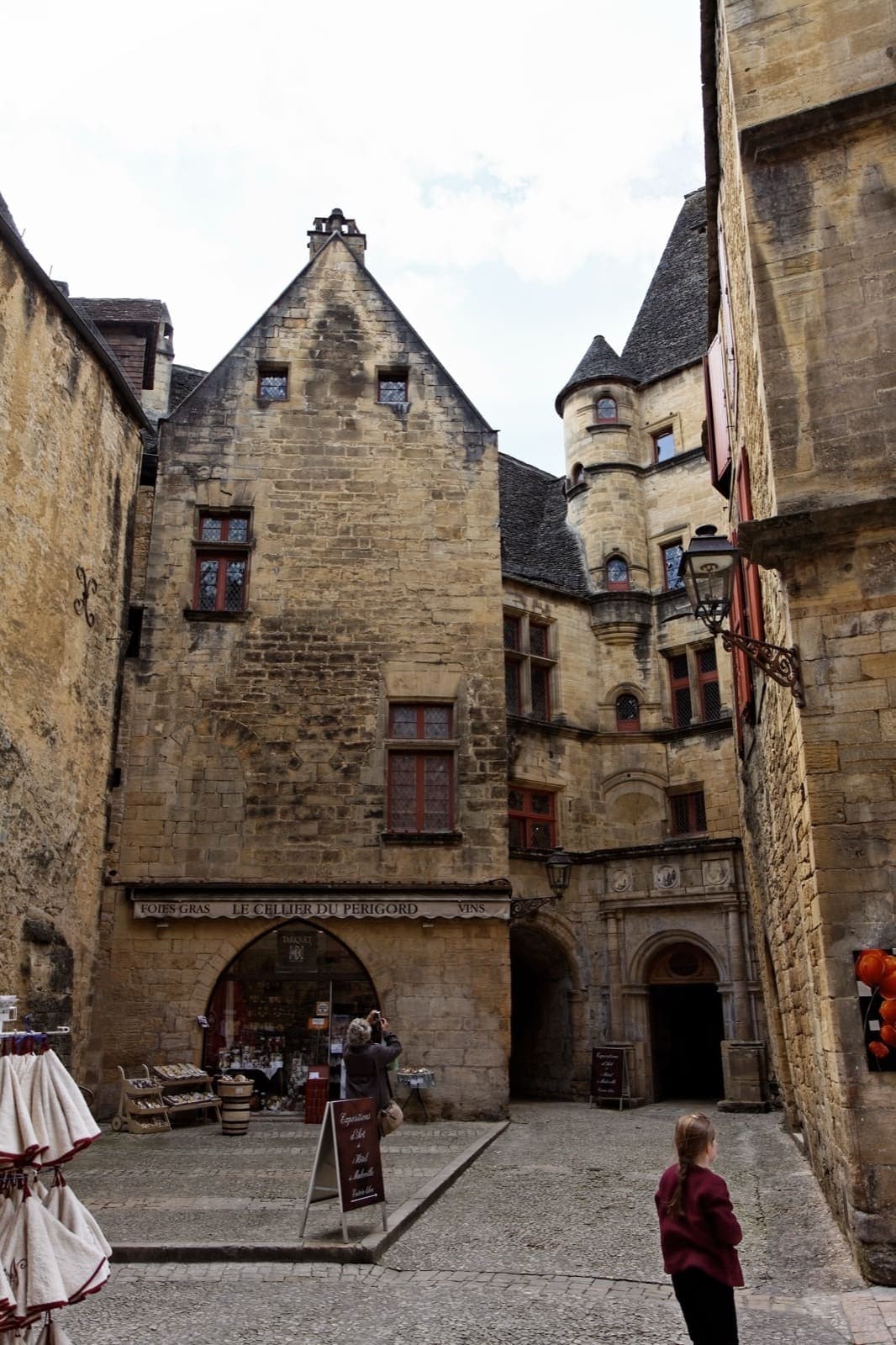
Hôtel de Maleville
On Place de la Liberté, this Renaissance mansion combines three former houses behind a single turreted façade.
View on Google Maps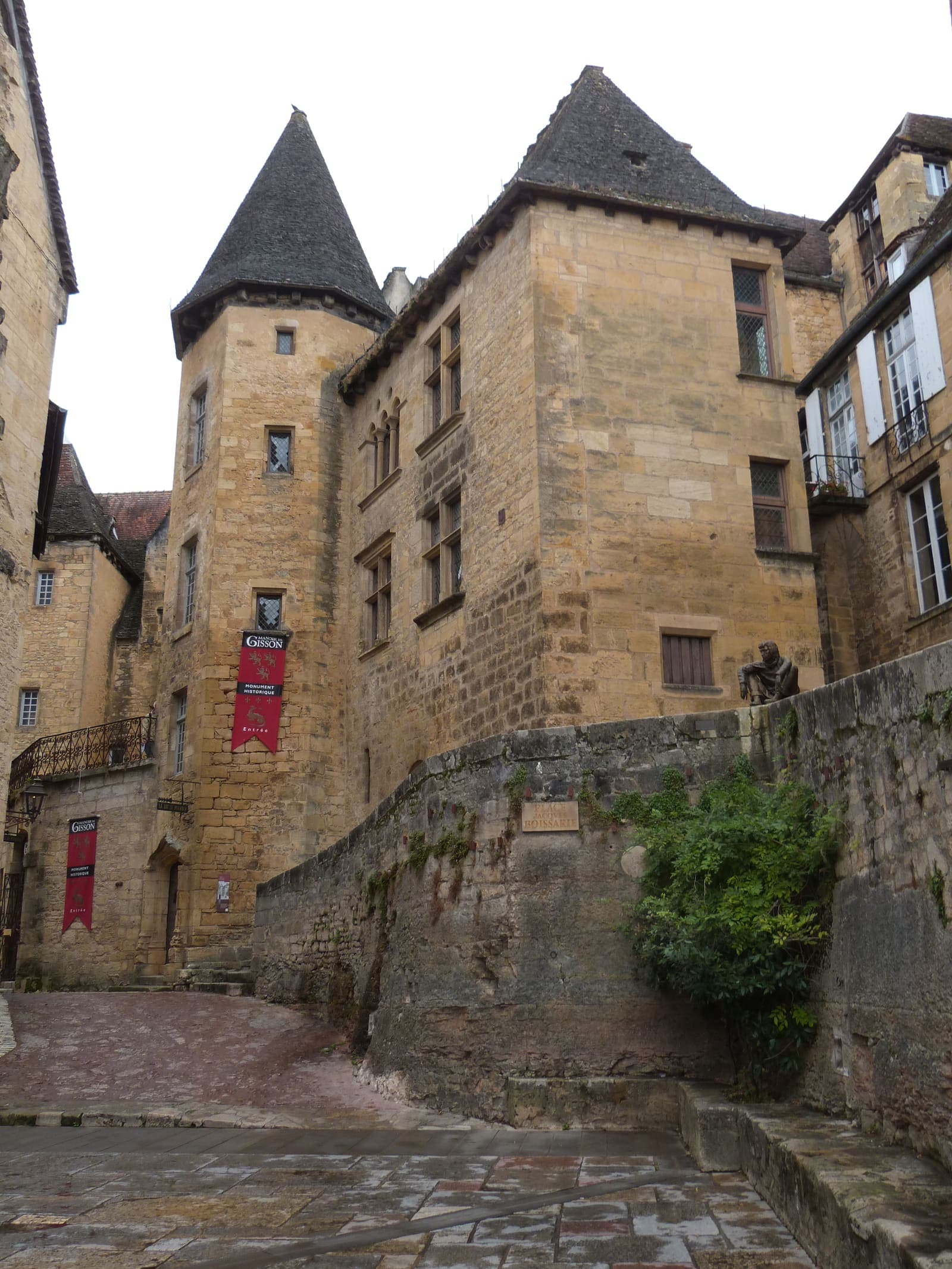
Manoir de Gisson
This 15th-century manor house, furnished in period style, is open to visitors and offers one of the finest views over Sarlat's rooftops from its tower.
View on Google Maps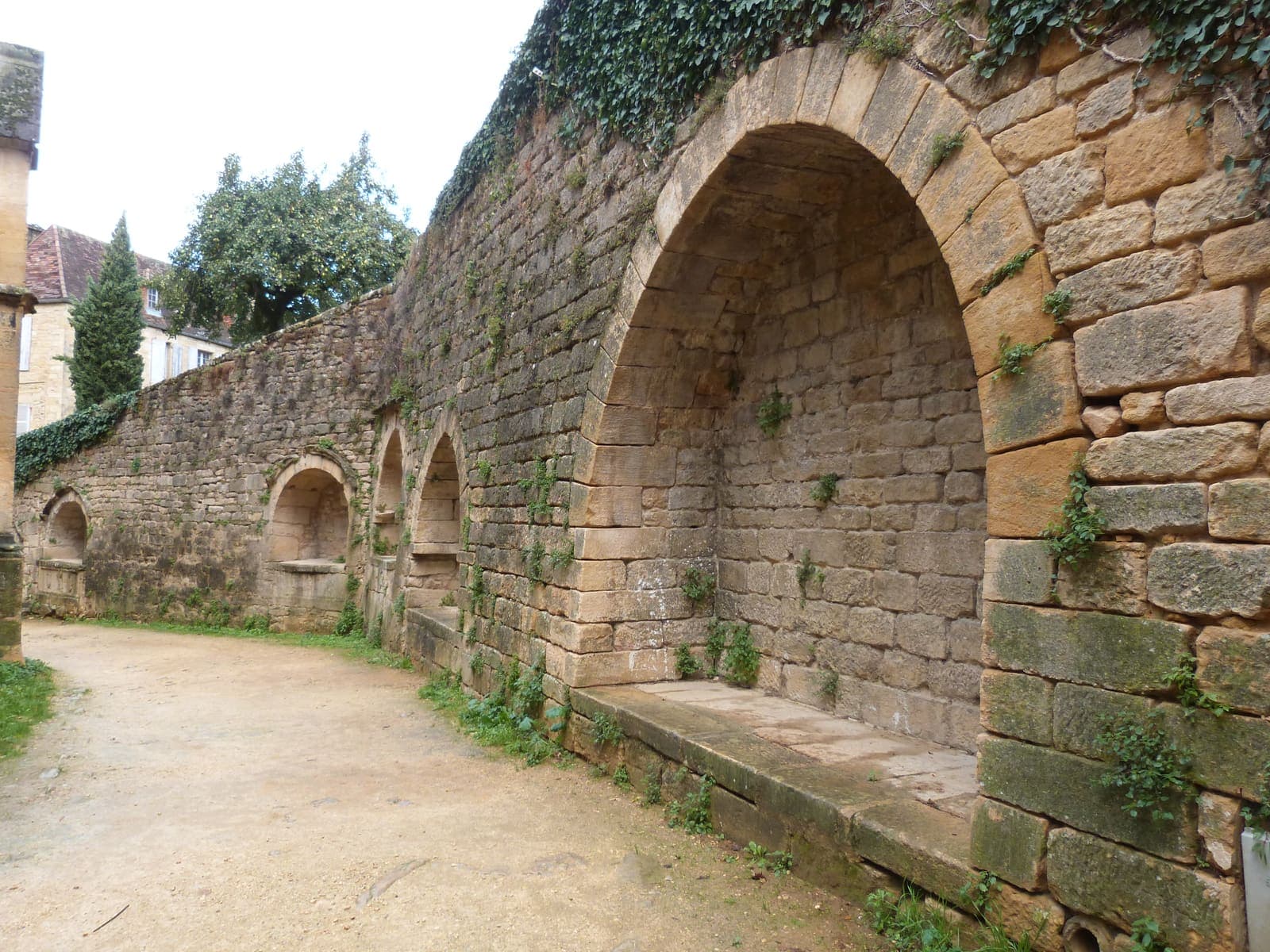
Jardin des Enfeus
Behind the cathedral, this former burial ground carved into the rock houses medieval tombs in a peaceful, surprising setting.
View on Google Maps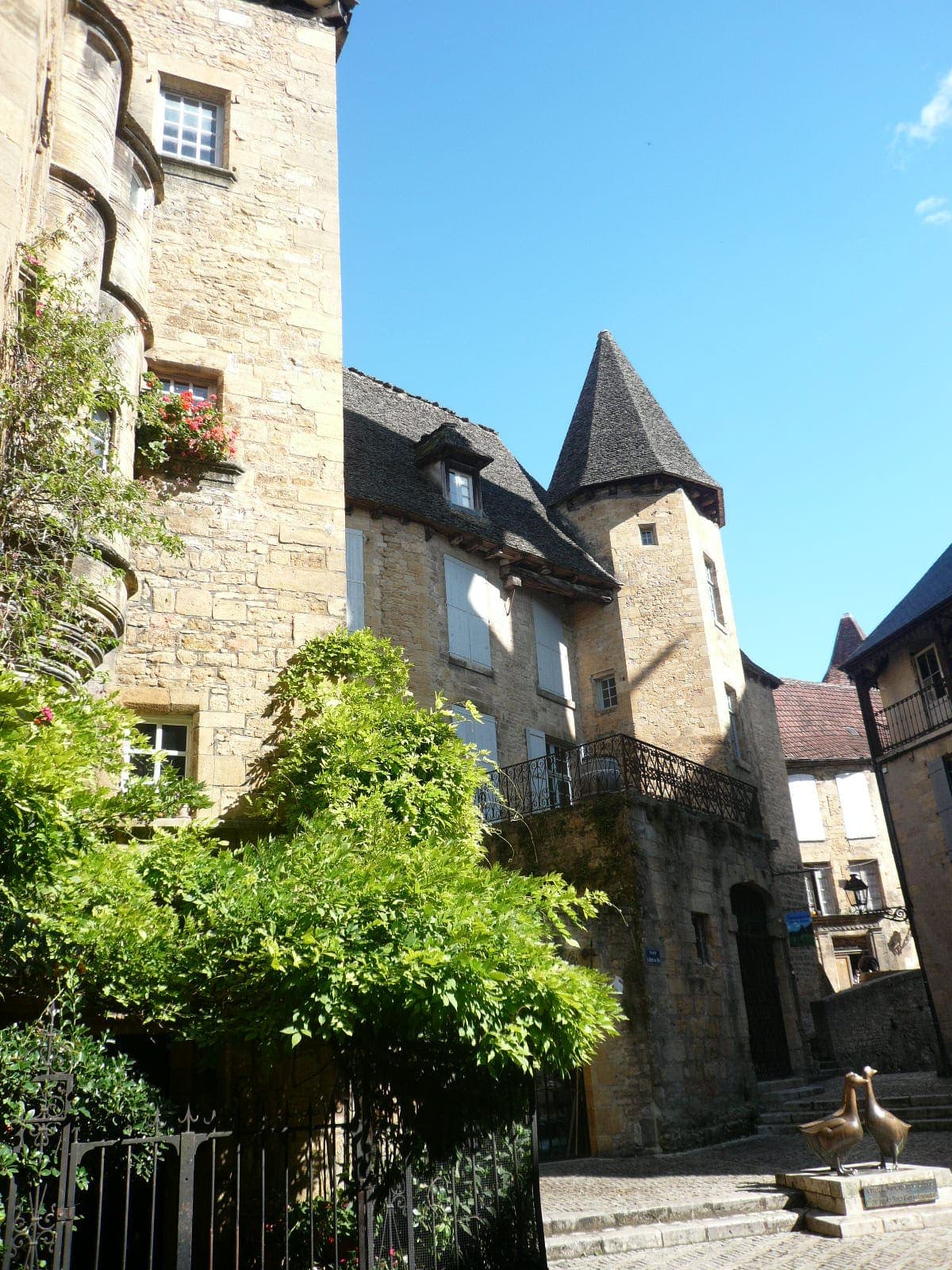
Sarlat market
Every Saturday morning the town becomes a market: foie gras, goat's cheese, walnuts, wild mushrooms and truffles in season.
View on Google MapsFinding your way around the centre
The old town is split in two by the rue de la Republique, which locals simply call la Traverse. To the east lies the busier half, with the place de la Liberte, Saint-Sacerdos cathedral and the tangle of lanes running down to the jardin des Enfeus. To the west, a quieter quarter, just as old, where you meet far fewer people in high season.
The former Sainte-Marie church, converted into a covered market by architect Jean Nouvel, houses a panoramic lift that rises alongside the bell tower and looks down over the rooftops. It is one of the few elevated viewpoints reachable from within the centre.
Since most of the centre is pedestrianised, the simplest approach is to park once and walk everywhere. It is also why staying inside the centre changes how you experience the town: you drop your shopping off, head back out in the evening, and stop planning your movements around the car.
When to visit Sarlat
The town is worth visiting year-round, but the atmosphere shifts a lot from season to season.
Spring
Soft light, terraces reopening and valley sites accessible without the crowds. One of the best windows for a first visit.
Summer
Peak season: festival, evening markets, constant buzz — but also the busiest streets between late morning and late afternoon. Going early or at the end of the day changes everything.
Autumn
Cep mushroom and walnut season, with especially generous markets and superb colours in the valleys. Many sites stay open until the late-October holidays.
Winter
The town empties out, the stone takes on a different tone and the truffle market sets the rhythm of the week. Some sites close or reduce their hours: check before setting off.
Sarlat at dusk
Many visitors leave in the late afternoon, and that is exactly when the old town becomes most enjoyable. The deliberately soft night lighting picks out the volumes of the facades and transforms the lanes entirely. A half-hour loop between the place de la Liberte, rue des Consuls and place des Oies is enough to see it.
This is one of the concrete advantages of sleeping in the centre rather than outside it: the evening stroll requires no planning at all.
Frequently asked questions
How long do you need to visit Sarlat?
Half a day is enough to walk the historic centre and take in the essentials. Two days give you time to visit one or two monuments, enjoy the market and come back in the evening, when the atmosphere shifts.
Can you visit Sarlat on foot?
Yes, and it is really the only sensible way: most of the historic centre is pedestrianised and distances within it are very short. You only need the car to reach sites out in the valley.
What day is the Sarlat market held?
The big market takes place on Saturday morning and spreads across the place de la Liberte and the surrounding streets. Smaller markets animate the town during the week depending on the season.
Do you need a car to visit Sarlat?
Not for the town itself, which is entirely walkable. A car is very useful, however, for reaching the castles, villages and caves of the Perigord Noir, which are poorly served by public transport.
Read next
- What to do in Sarlat during your stayHeritage, the Saturday market, food, walks and evenings out: the best things to do in Sarlat-la-Caneda depending on how long you stay.
- Two days in SarlatA two-day plan for Sarlat: historic centre, market, monuments and half a day in the Dordogne valley. Ideal for a weekend in the Perigord Noir.
- What to do around SarlatDordogne castles, perched villages, gardens, prehistoric caves and canoeing: everything to do around Sarlat, all within an hour's drive.
- Visiting the Perigord NoirThe Dordogne valley, the Vezere valley, listed villages, castles and painted caves: how to explore the Perigord Noir and where to set up your base.
Content updated on